

Do You Really Need a Realtor?
What Most Homeowners Don’t Realize
When most homeowners think about selling their home, the first step is simple:

For most homeowners, the first step is finding an agent—not understanding the strategy.
Find a Realtor.
And in many cases, that’s the right move.
But there’s a question most people never stop to ask—what do I actually understand about the decisions being made on my behalf?
The Reality Most Sellers Don’t See
A good Realtor brings experience, market knowledge, and guidance through the process. That part is not in question.
What often goes unexamined is how much the homeowner truly understands the strategy behind the recommendations they’re given.
Because in real estate, outcomes are shaped long before negotiations begin. They’re influenced by how a home is priced, how it is positioned relative to competing listings, and how buyers perceive its value the moment it hits the market. Even decisions around preparation—what to update, what to leave alone—carry weight.
These are not small details. They are the difference between momentum and missed opportunity.

Pricing, positioning, and preparation aren’t small details—they’re the decisions that shape your outcome.
It’s Not About Replacing a Realtor
This isn’t about avoiding or replacing a Realtor. It’s about showing up to that relationship differently.
Most sellers enter the process relying entirely on guidance, without having the context to evaluate it. When you understand the strategy behind pricing, preparation, and positioning, the dynamic changes. Conversations become more productive. Questions become more precise. Decisions become more intentional.
A great Realtor can guide you through the process. But an informed seller can actively participate in the strategy behind it.
Where Most Sellers Lose Leverage
Many homeowners don’t realize where leverage is gained—or lost.
It often happens quietly. A home is priced based on a recommendation, but without fully understanding how that price positions it against competing options. Improvements are made with good intentions, but without clarity on what actually influences buyer perception. The process unfolds step by step, but without a cohesive strategy tying those decisions together.
It’s not that the choices are reckless or uninformed. It’s that the full picture isn’t always visible at the time those decisions are made.tor or Not…
The reality is simple:
Understanding the strategy behind the decisions being made changes everything.

The advantage isn’t avoiding guidance — it’s understanding it.
Whether You Use a Realtor or Not…
Whether you choose to work with a Realtor or explore selling on your own, one truth remains:
Understanding the strategy behind the decisions being made changes everything.
Some homeowners will rely on professional representation. Others may take a more independent approach. But in either case, the outcome is shaped by how clearly those decisions are understood from the beginning.
A Smarter Starting Point
Before you list, before you price, before you commit to a path, there is value in stepping back and understanding the process from a strategic perspective.
Because the most successful sellers aren’t the ones who simply follow advice.
They’re the ones who understand it.
— SREI Editorial —
Author
Ang Welch
Founder, Strategic Real Estate Institute (SREI)
Strategic Real Estate Network (SREN)
Ang Welch is the founder of the Strategic Real Estate Institute (SREI) and Strategic Real Estate Network (SREN), focused on bringing structured decision-making frameworks and strategic clarity to residential real estate transactions.
Want to understand how pricing and preparation actually work before you list?
Should I Wait to Sell or List Now?
The Strategic Decision Most Homeowners Get Wrong
There’s a question many homeowners quietly wrestle with long before they ever speak to an agent:
“Should I wait… or should I sell now?”
It rarely comes from a place of urgency. More often, it stems from uncertainty—about the market, about timing, and about whether a better opportunity might exist just a few months down the road.
On the surface, waiting can feel like the safer choice.
But in practice, the decision is rarely about timing the market.
It’s about understanding your position within it.

The decision to sell is often framed as a question of timing — but it is more often a question of positioning.
The Illusion of “Better Timing”
There is a natural tendency to believe that the market will become clearer with time—that interest rates might improve, inventory might shift, or buyer demand might strengthen.
And sometimes, those things do happen.
But just as often, they don’t happen in a way that creates a clear advantage.
Markets don’t move in straight lines. They adjust, react, and recalibrate—often in ways that are difficult to predict with precision.
What feels like patience can quietly become hesitation.
What Sellers Are Actually Trying to Solve
When homeowners ask whether they should wait, they are rarely asking about the market alone.

Behind the question of timing is often a deeper concern: what happens next.
They are asking whether they will achieve a better price later, whether they will be able to find their next home, and whether they are making the decision at the right moment.
These are not timing questions.
They are questions about how to evaluate a decision without a clear framework.
And without that clarity, waiting doesn’t resolve uncertainty—it extends it.
The Risk of Waiting That Few Consider
There is a common assumption that waiting preserves opportunity.
But waiting also introduces new variables.

Market conditions don’t pause while decisions are being delayed — they continue to evolve.
Inventory levels change. Buyer behavior shifts. Financing conditions tighten or loosen.
In some cases, sellers who wait find themselves entering a market that is more competitive—or less forgiving—than the one they hesitated to enter.
The challenge is not that waiting is always wrong.
It’s that waiting is often unstructured.
A More Strategic Way to Think About It
The better question is not:
“Should I wait or sell now?”
It is:
“What needs to be true for this to be the right decision?”
When viewed this way, the focus shifts away from predicting the market and toward understanding your position within it.
That includes how your home compares to current inventory, where your pricing would likely fall, what your next move realistically looks like, and how much flexibility exists within your timeline.
Clarity in these areas does more to inform the decision than any attempt to forecast market conditions.
The Moment That Often Gets Missed
There are times when the market presents a window of alignment—where pricing, demand, and positioning come together in a way that supports a strong outcome.
Those windows are not always obvious in advance.
But they are often clear in hindsight.
Sellers who are prepared—who understand their position and have clarity around their next steps—are the ones most able to act when those windows appear.
Those who wait for certainty often find that the moment passes before it ever feels definitive.
Final Thought
Waiting can feel like control.
But in many cases, it is simply a delay in making a decision that requires clarity.
The market will continue to move, whether that decision is made now or later.
And in a process where timing, positioning, and preparation all play a role, the advantage rarely belongs to those who wait the longest.
It belongs to those who understand their position well enough to act with confidence.
-SREI Editorial-
Ang Welch
Founder, Strategic Real Estate Institute (SREI)
Strategic Real Estate Network (SREN)
Ang Welch is the founder of the Strategic Real Estate Institute (SREI) and Strategic Real Estate Network (SREN), focused on bringing structured decision-making frameworks and strategic clarity to residential real estate transactions.
A Practical Next Step
For homeowners trying to determine whether now is the right time to sell, the most important step is not predicting the market — it is understanding your position within it.
The SREN Pricing with Precision guide is designed to help you evaluate that position, assess your competition, and make informed decisions with clarity before your home ever hits the market.
The Hidden Cost of Overpricing: Why “Testing the Market” Can Backfire
There is a phrase that surfaces in nearly every early conversation with a potential seller:
“Let’s price it a little high and see what happens.”
It sounds reasonable. Measured, even. The logic suggests flexibility—start high, leave room to negotiate, and adjust if needed. On the surface, it feels like a cautious approach.
But in practice, pricing a home above where the market perceives value is rarely neutral. It sets a sequence in motion, one that often unfolds quietly at first, and then all at once.
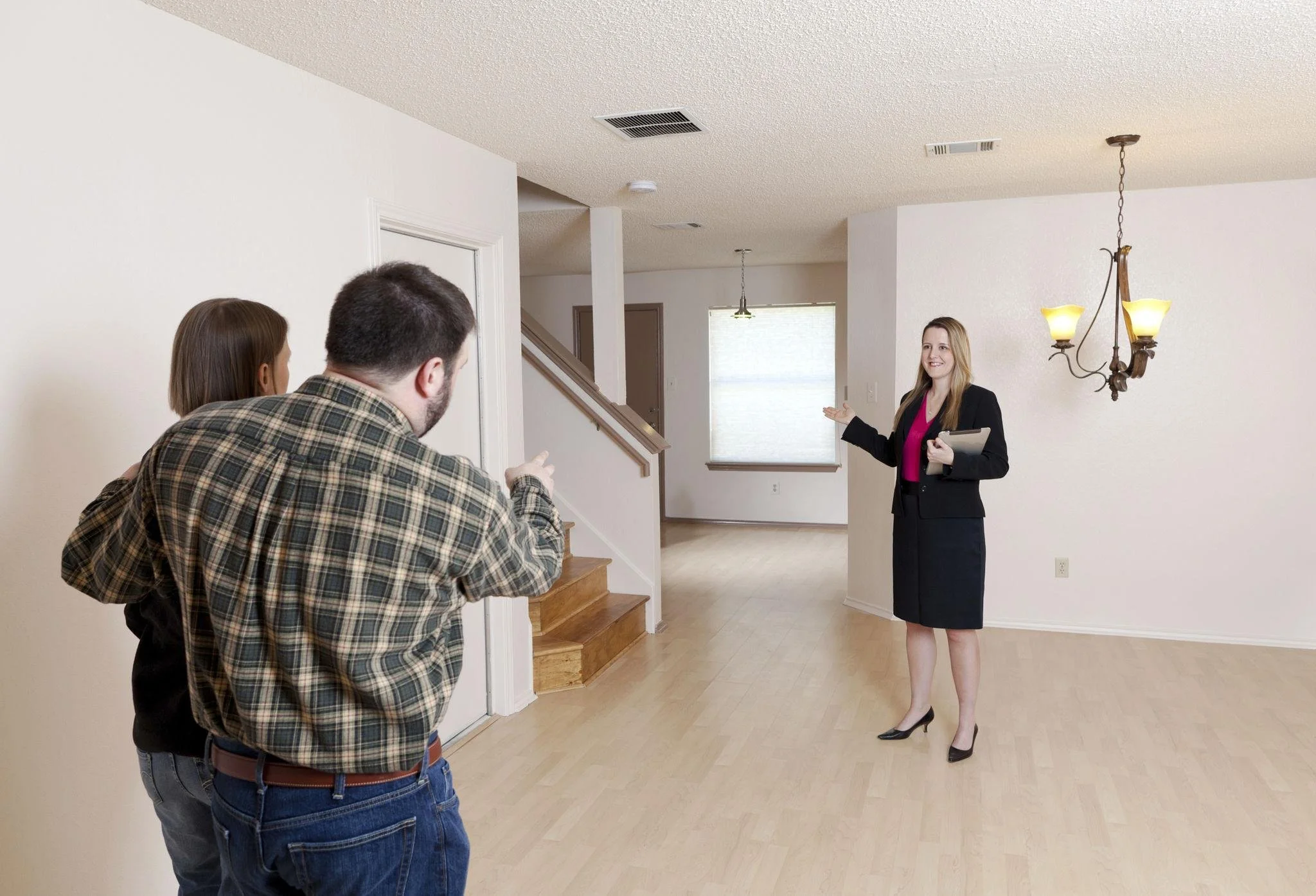
Homes that require price reductions often didn’t fail because of condition—they missed alignment with buyer expectations from the very beginning.
The Moment That Matters Most
When a home first comes to market, it enters a brief but critical window of attention. This is when the listing is new, when buyer alerts are triggered, and when serious purchasers — those who have been watching and waiting — decide whether a home is worth pursuing.
This moment carries a kind of leverage that cannot be recreated later.
If the home is positioned correctly, interest builds quickly. Showings follow. Conversations begin. In some cases, competition forms.
But if the home is introduced at a price that sits outside of where buyers see value, something else happens. Not dramatically, and not always visibly — but decisively.
Buyers move on.

Informed buyers don’t negotiate with listings that feel misaligned — they simply exclude them from consideration.
The Quiet Shift in Perception
In today’s market, buyers are not guessing. They are watching. They track new listings closely, often within very specific price ranges, and they understand comparative value faster than many expect.
When a home is priced beyond those boundaries, it is not always challenged — it is often ignored.
The result is subtle at first. Fewer showings. Limited feedback. A sense that activity is slower than expected. Sellers may interpret this as timing, or even chance. But more often, it is positioning.
Over time, the lack of engagement begins to shape perception. Days on market accumulate, and with them comes a quiet shift in how the home is viewed.
Nothing about the home itself may have changed. But the way it is perceived has.
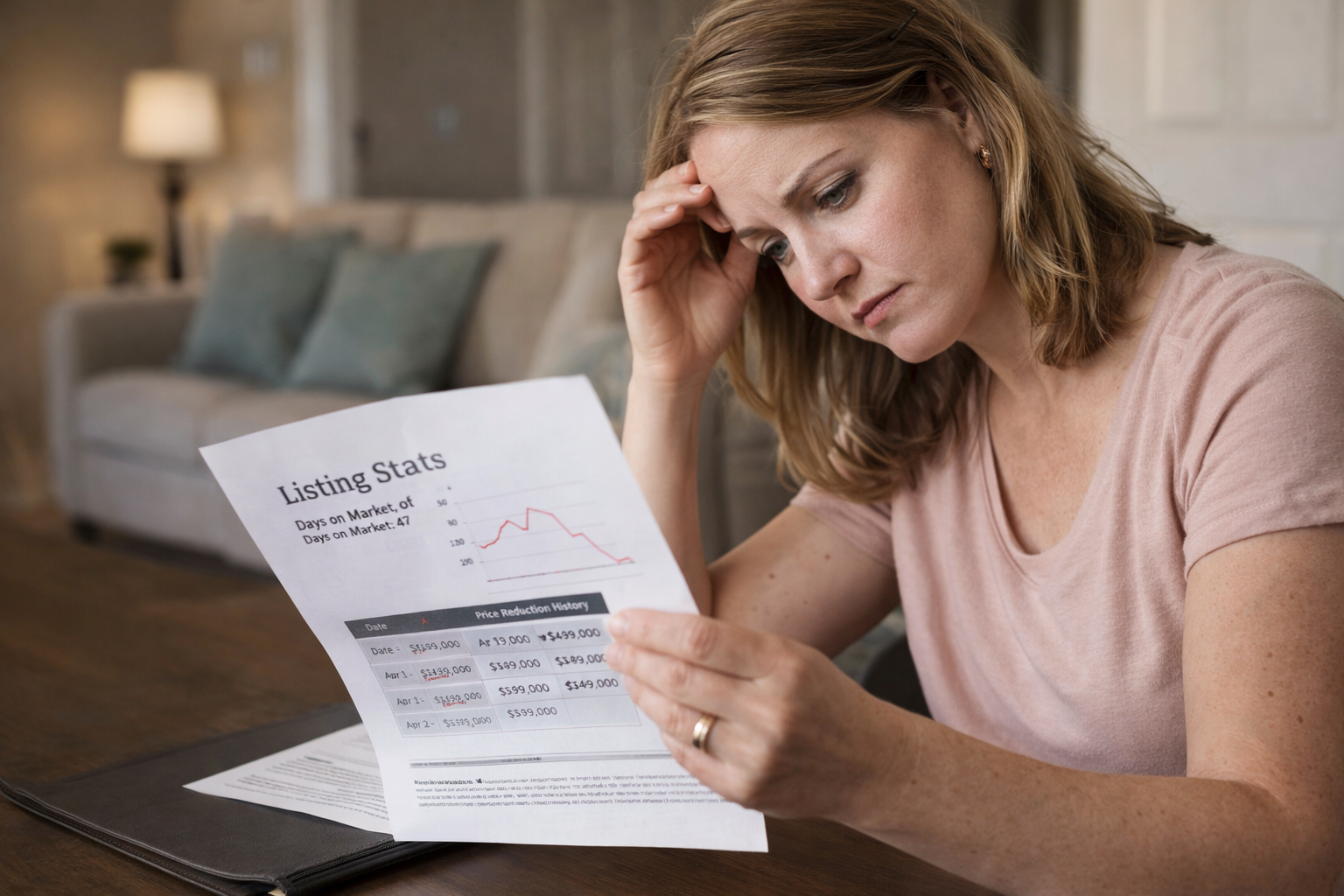
As time on market increases, perception begins to change—often more than the property itself.
When the Adjustment Comes
Eventually, most overpriced listings are adjusted. The price is reduced in an effort to reconnect with the market and re-engage buyers.
But by this point, the context has changed.
What was once a new listing is now a familiar one. What was once an opportunity is now a question.
Buyers who may have overlooked the home initially begin to revisit it, but often with a different mindset. The reduction signals flexibility, and with that comes a shift in negotiating power.
Offers, when they come, tend to reflect that shift.
Sellers who initially aimed to “leave room” often find that the room has already been claimed — just not in the way they intended.

Price adjustments are interpreted by the market as response — not strategy — and buyers adjust their expectations accordingly.
The true cost of overpricing is not simply time. It is position.
A home that enters the market aligned with buyer expectations has the opportunity to generate interest, create competition, and maintain leverage.
A home that does not rarely returns to that same position.
And in a process where timing, perception, and negotiation all play a role, that difference matters more than most realize.
— SREI Editorial —
Ang Welch
Founder, Strategic Real Estate Institute (SREI)
Strategic Real Estate Network (SREN)
Ang Welch is the founder of the Strategic Real Estate Institute (SREI) and Strategic Real Estate Network (SREN), focused on bringing structured decision-making frameworks and strategic clarity to residential real estate transactions.
A Practical Next Step
For homeowners who want a more structured way to approach pricing — grounded in how the market actually behaves rather than how it is often described —
The SREN Pricing with Precision guide walks through that process step by step.
It is designed to help you evaluate your position, understand your competition, and make pricing decisions with clarity before your home ever hits the market.